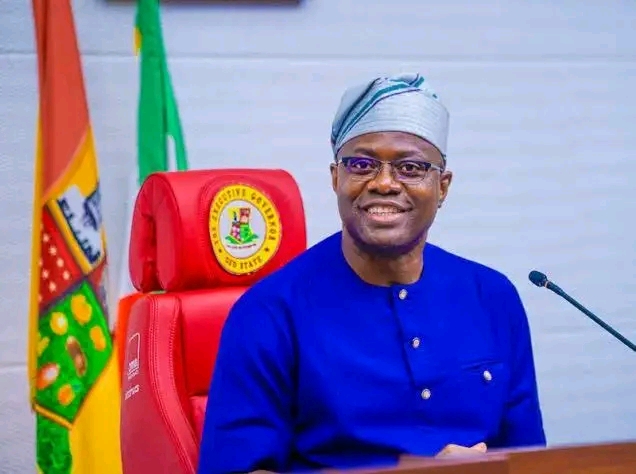
Oyo State Governor, Seyi Makinde, has called for a major rethink of Nigeria’s petrol pricing system, arguing that Nigerians should not be forced to pay higher prices because of the government’s failure to properly secure the country’s borders, Peak Newspaper reports.
Makinde made the position known in the latest edition of his newsletter, The Business of Governance, where he questioned the way Nigeria’s petroleum pricing debate has largely been framed.
According to the governor, the discussion has for years been reduced to whether the government should continue subsidising petroleum products or allow Nigerians to pay full market prices.
He argued that the more important question should be whether Nigeria, as an oil-producing country, has a fair, transparent and sustainable pricing system that allows citizens to benefit from the country’s natural resources.
“For years, the debate in Nigeria has largely been presented as a choice between subsidising petroleum products or allowing Nigerians to pay the full market price. I believe we are asking the wrong question,” Makinde said.
He called for greater transparency in the factors used to determine the price of petrol, saying Nigerians should be able to see how pump prices are calculated.
The governor listed crude oil price benchmarks, refining costs and margins, exchange-rate assumptions, logistics and distribution expenses, taxes, levies and other relevant variables as information that should be made available to the public.
Makinde said making these components public would allow Nigerians to better understand and question the prices they are required to pay for petroleum products.
The Oyo governor also rejected the argument that Nigerians should pay higher petrol prices to discourage the smuggling of petroleum products into neighbouring countries.
He maintained that securing Nigeria’s borders is a responsibility of government and that citizens should not be made to bear the financial consequences of inadequate border security.
“We should also reject the argument that Nigerians must pay more for petroleum products simply to eliminate the price difference that makes smuggling into neighbouring countries profitable,” he said.
“Nigerians should not be made to bear the cost of government’s inability to secure its borders.”
Makinde disclosed that he would present an alternative approach to Nigeria’s petroleum pricing system in the coming weeks, urging Nigerians to assess the proposal based on its merits.
He said the country’s petroleum debate should go beyond the question of whether fuel subsidy should return or remain removed.
Instead, he said attention should be focused on whether the current pricing framework is suitable for Nigeria and whether it provides citizens with a fair benefit from the country’s natural resources.
“Reset Nigeria means being willing to interrogate the system itself,” Makinde said.
The governor explained that his proposed “Reset Nigeria” initiative would not be limited to petroleum pricing. He said it would also address the economy, security architecture, education, institutions and Nigeria’s wider social and political system.
Makinde argued that changing individuals in government alone would not solve the country’s challenges unless the systems and institutions responsible for producing poor outcomes were also reformed.
He expressed concern over the number of Nigerians still living in poverty, families struggling despite working hard and young people facing limited opportunities after education.
He also identified insecurity and weak institutions as major challenges affecting the wellbeing and economic prospects of Nigerians.
According to Makinde, achieving a national reset would require accountable leadership and active participation from citizens, stressing that rebuilding Nigeria cannot be left to one individual.
“This will not be an instant transformation, nor will it be the work of one person. It must be a deliberate national effort supported by a clear roadmap, measurable priorities and the sustained participation of Nigerians at home and abroad,” he said.
The governor said he would continue to present his proposals for reforming Nigeria’s economy, security system, education sector, institutions and political structure, while inviting Nigerians to contribute to the national conversation.