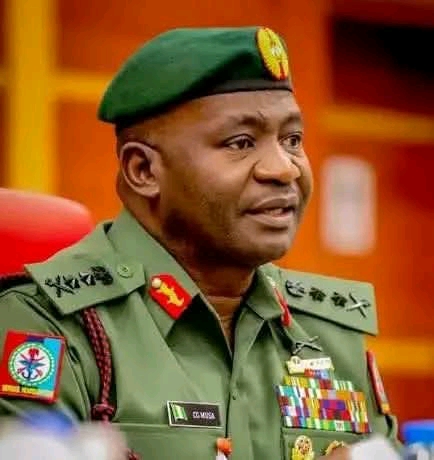
President Bola Ahmed Tinubu’s nomination of General Christopher Gwabin Musa as the new Minister of Defence has stirred discussions across the country, but in truth, it comes as no surprise. It is a predictable yet absolutely necessary choice—one rooted in realism, gratitude, and Nigeria’s pressing security needs.
Given the exceptional experience, capacity, and professionalism General Musa displayed during his tenure as Chief of Defence Staff, allowing him to fade out like other retired generals would have amounted to a national oversight. At a time when insecurity continues to threaten lives, investments, and national cohesion, Nigeria cannot afford to dispense with one of its most strategic security assets.
General Musa is a soldier whose career tells a consistent story of loyalty, competence, and outcomes. From his commissioning as a Second Lieutenant in 1991 to his steady rise through the ranks, he has proven himself in some of the nation’s most challenging theatres. His command roles in the Lake Chad region, Operation Lafiya Dole, and later Operation Hadin Kai, underscored a rare blend of operational intelligence and decisive leadership. Wherever he served, he restored direction, discipline, and purpose.
As Chief of Defence Staff from 2023 to 2025, General Musa brought a refreshing calmness to Nigeria’s security architecture. He coordinated the services with tact, prioritized collaboration over rivalry, and demonstrated a deep understanding of the nation’s layered security threats. His leadership helped stabilize areas previously crippled by insurgency and banditry, earning him genuine respect both within the military and among citizens.
This is why President Tinubu’s decision to retain him within the national security framework is not just logical but strategic. In a period when Nigeria’s defence system needs continuity rather than experimentation, General Musa’s experience offers the kind of institutional memory and operational clarity that cannot be easily replaced.
The State House may have released its “white smoke,” but it is a signal many Nigerians anticipated. General Musa’s nomination is not a political favour; it is a decision grounded in necessity. Nigeria’s security challenges demand someone who understands the battlefield, the troops, the intelligence gaps, and the urgent reforms needed—and General Christopher Musa fits that description perfectly.
His return to duty symbolises a commitment to continuity, competence, and national security above all else. It is indeed a predictable choice, but more importantly, it is the choice Nigeria needs now.