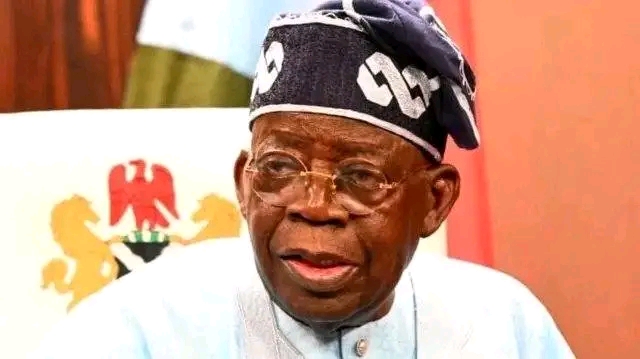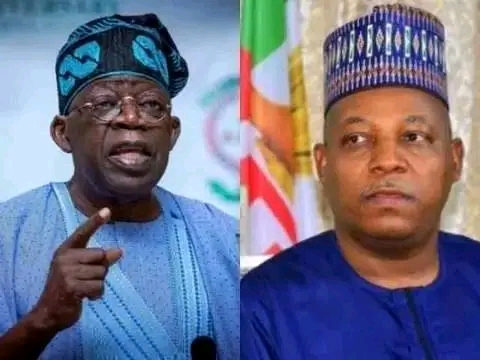
Vice President Kashim Shettima has said the economic reforms introduced by President Bola Tinubu prevented Nigeria from slipping into a deeper economic crisis and saved the country from economic collapse, Peak Newspaper reports.
Shettima made the remarks on Saturday while speaking with journalists in Lagos shortly after meeting with President Tinubu.
The Vice President, while defending the administration’s economic policies, said the country was already facing severe financial pressure when the Tinubu administration assumed office in 2023.
According to him, Nigeria’s foreign reserves had fallen below $3.9 billion at the time, a situation he said was insufficient to cover even one month of fuel imports.
“When we assumed the mantle of leadership, our foreign reserves were a staggering below $3.9 billion. That was not enough to import fuel for one month,” Shettima said.
He attributed the administration’s decision to remove the petrol subsidy and unify the country’s multiple exchange rates to what he described as President Tinubu’s courage and conviction in taking difficult economic decisions.
“The withdrawal of the fuel subsidy, the realignment of the multiple exchange rate were far-reaching decisions,” he said.
“The economy was actually on the verge of collapse. He saved the economy.
“I want Nigerians to understand this fundamental truism. We were on the road to Caracas. He saved our economy; he saved the nation from falling into pieces.”
Shettima, however, acknowledged the economic difficulties being experienced by Nigerians, saying the Federal Government was aware of the hardship caused by the reforms and was working on measures to reduce their impact.
“We appreciate the pains Nigerians are going through, but tough times do not last forever; tough people do,” he said.
The Vice President said the administration was rolling out programmes and projects aimed at easing transportation costs and other economic pressures faced by citizens.
He disclosed that additional interventions would be introduced in the coming weeks, including an e-logistics programme in the North-West and electric tricycles in the North-East.
“In the next couple of weeks, we are going to launch e-logistics in the North-West. We are going to launch 10,600 electric tricycles to ease the pains of the people in the North-East, and 300 buses and e-taxis; all these are meant to ameliorate the suffering of our people,” Shettima added.
He also said President Tinubu had empathy for ordinary Nigerians, stressing that the planned interventions were designed to address some of the transportation and economic challenges confronting households and businesses.
Saturday’s meeting in Lagos was the first public engagement between President Tinubu and Vice President Shettima since Tinubu returned from his European vacation. It also marked their first public interaction since Shettima returned from the 81st United Nations General Assembly in New York.
The comments come amid an ongoing debate over the state of Nigeria’s economy and the impact of the Tinubu administration’s reforms.
In his national broadcast to mark Nigeria’s 66th Independence Day anniversary, President Tinubu maintained that the country was on the path to prosperity.
However, opposition figures have continued to challenge the administration’s assessment of the economy and the effects of its policies on Nigerians.
Former Vice President Atiku Abubakar, now associated with the African Democratic Congress, ADC, has accused the Tinubu administration of worsening poverty since taking office in 2023.
Peter Obi has also criticised the government’s economic direction, arguing that Nigerians are experiencing increased hardship, hunger and insecurity.
The Federal Government has continued to maintain that the reforms, although painful in the short term, are necessary to stabilise the economy and place Nigeria on a stronger path to sustainable growth.