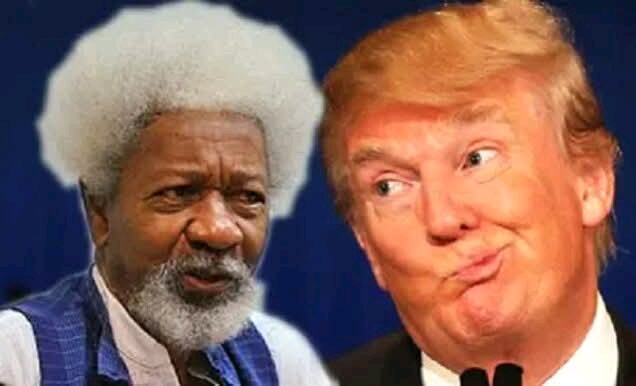
Nobel Laureate, Prof. Wole Soyinka, has declared that he will not honour an invitation by the United States Consulate in Lagos for a visa reinterview, describing the exercise as strange, bizarre, and ill-timed.
Speaking in an exclusive interview with TheNEWS/PMNEWS and Peak Newspaper, Soyinka said he was initially convinced the letter inviting him to appear at the Consulate on Thursday, September 11, was a scam.
“I thought it was advance fee fraud because I had never received that kind of letter from that or any other embassy,” he said, adding that it took time for him to accept that the letter was genuine.
The playwright and activist stressed that the issue was not about him personally but about the broader implications of embassies subjecting travellers to arbitrary procedures.
Still, he maintained that he would not appear for the reinterview, insisting he had “more important things to do than chase visas for places I don’t want to go to and where I am not wanted.”
Soyinka also took issue with the choice of September 11 date for the reinterview, describing it as insensitive given its significance for the United States and the world.
“To me, 9/11 should be regarded as a day of national mourning, of atonement by the Consulate of the United States. They should close down offices on that day, not keep inviting people to come and have their visas taken away,” he argued.
The Nobel Laureate went further to question the conduct of the current U.S. leadership, comparing the country’s president to a “white Idi Amin.”
According to him, “If you look very closely at the conduct, the behaviour, the mentality of the present incumbent president, you find out there are Idi Amins of different colours. And if Idi Amin says I should come to his embassy, I would think twice before going because I don’t know what is waiting for me on the other side of the door.”
Soyinka said he was wary of such invitations, citing concerns for his safety under the current American leadership. He even suggested, half in jest, that perhaps what the United States needs at this time “is an exorcist.”
While maintaining his decision to shun the reinterview, Soyinka observed that the development at least provided an opportunity to reflect on the vulnerability of immigrants and long-term residents whose legal status abroad could suddenly be challenged.
“Those who actually built homes there and suddenly [are] told you cannot continue living there, I find it horrifying, inhuman and dehumanising,” he said.
The United States Consulate has not responded to Soyinka’s comments.